
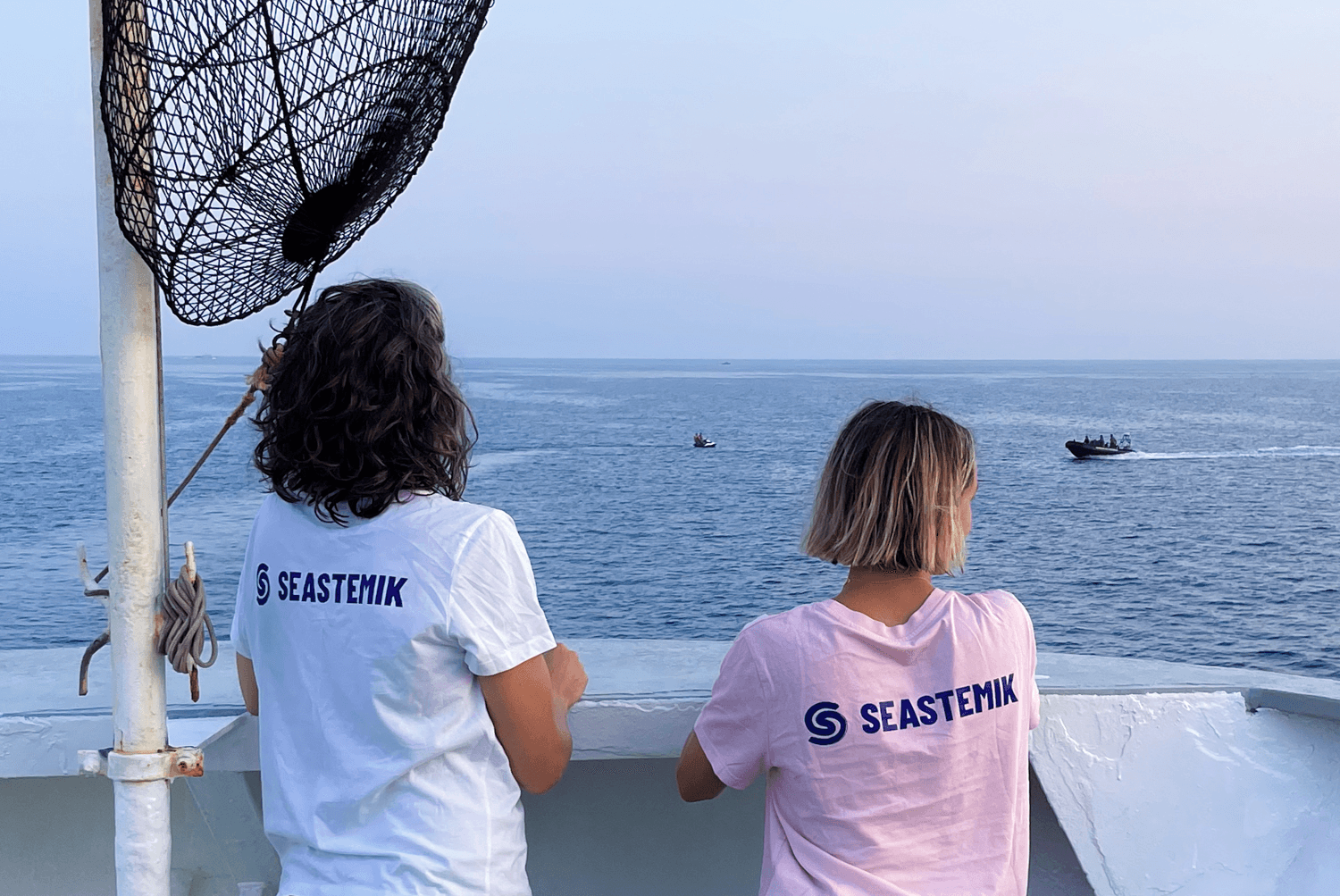
Does the Seastemik team still eat salmon?
Spoiler: no. Each in our own way and at our own pace, we have realized that our greatest power to build a desirable world and future lies on our plates.
We’ll tell you when, how, and why each of us took salmon off our plates.
Six people on the team, six different journeys to stop eating salmon. Some stopped twenty years ago, others more recently. Some had a moment of realization; others needed time.
Esther, co-founder and co-director, had a long way to go. She grew up in a fishing family and learned from an early age to think of fish as food. But one scene changed everything. In 2013, she was in Morocco with friends. They bought live fish for lunch. A few minutes later, she felt “the taste of death” in her mouth. That day, she realized she would rather see fish alive than on her plate.
What sparked the change?
For Maxime, co-founder and co-director, the realization came during a mission with Sea Shepherd. In 2020, he was off the coast of West Africa and witnessed industrial fishing. “It was a shock to see these sea creatures hauled up in nets, many of them then thrown back into the sea, dead for nothing.” When he returned, he stopped eating fish altogether.
Charlotte, the corporate partnerships lead, gradually rethought her relationship with animals. Then one day, while looking at a sole fillet, it clicked. “I no longer saw the fillet. I saw the animal, its body, the life that had been taken from it.”
For Fleur, communications director, the transition to eating no animals also happened gradually, with the invaluable support of her wife, who has been vegan for nearly 15 years. Meeting her helped Fleur discover a different way to cook, but above all, to gradually bring her habits in line with her values.
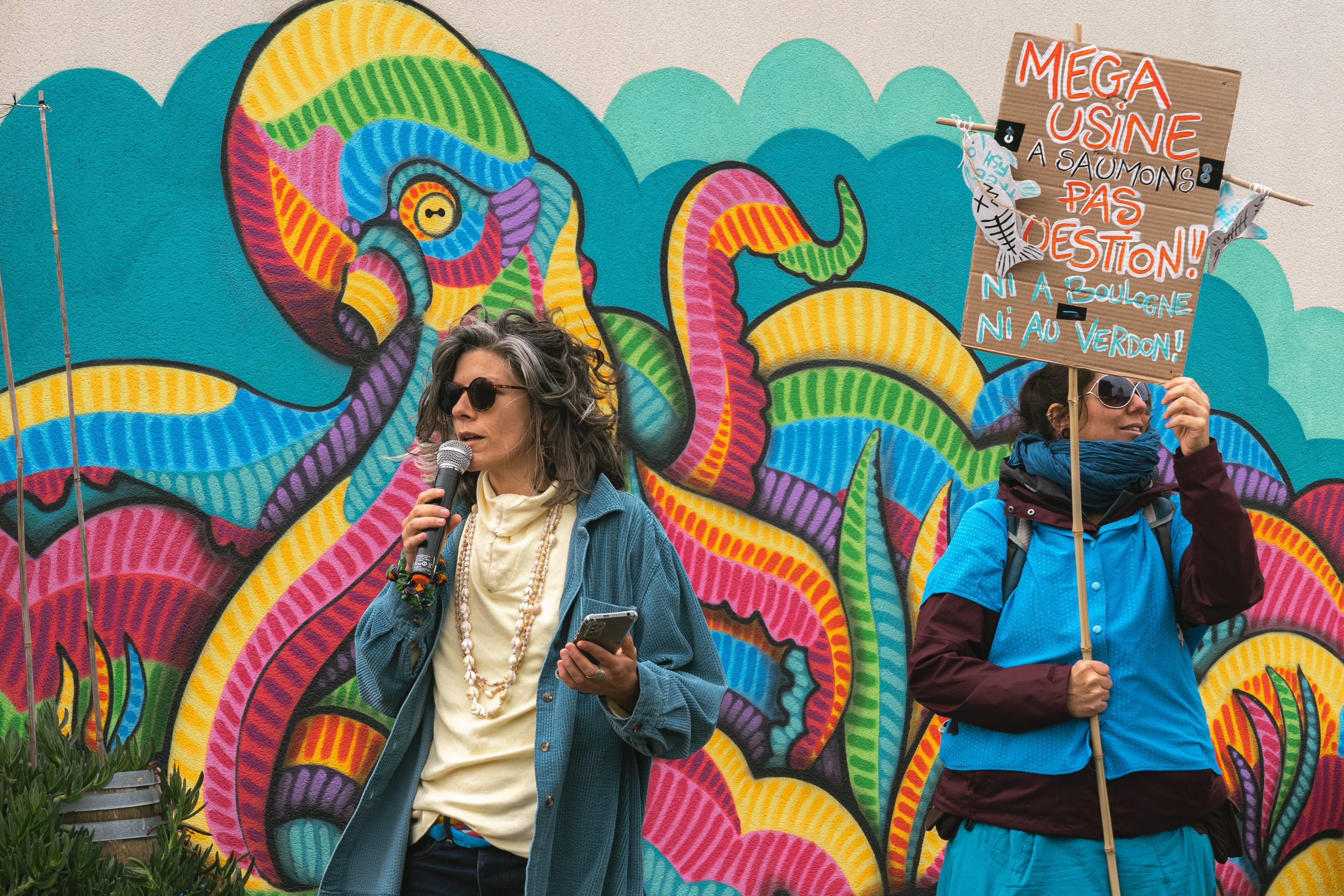
Marie, a campaign lead, began by cutting down on meat after hearing friends describe how intensive farming harms animals and the world we share with them. After doing some research, she came across investigations into fish farming, fishing, and the state of the ocean. Since then, fish have been off the menu for her. A few years after stopping, she was tempted by a piece of gravlax salmon and finally tried it. The verdict? “It felt like having the Old Port of Marseille at 7 a.m. in my mouth.” That was the end of that.
Diane, digital communications lead, did not have a sudden realization. She grew up in a family where salmon simply disappeared from the table after her father watched a documentary about the harmful impacts of fish farming. As an adult, she watched Ali Tabrizi’s hard-hitting documentary Seaspiracy. No more doubts: salmon was off the menu.
So what do we eat instead?
It is often the first question people ask when we talk about giving up salmon: what do I actually eat instead? Our answer is unanimous: far more than you might think!
Some of us wanted to keep familiar foods. Marie, for example, tried plant-based salmon alternatives designed to recreate its texture and flavor. “These products can be a good stepping stone,” she says, while emphasizing the importance of giving yourself time.
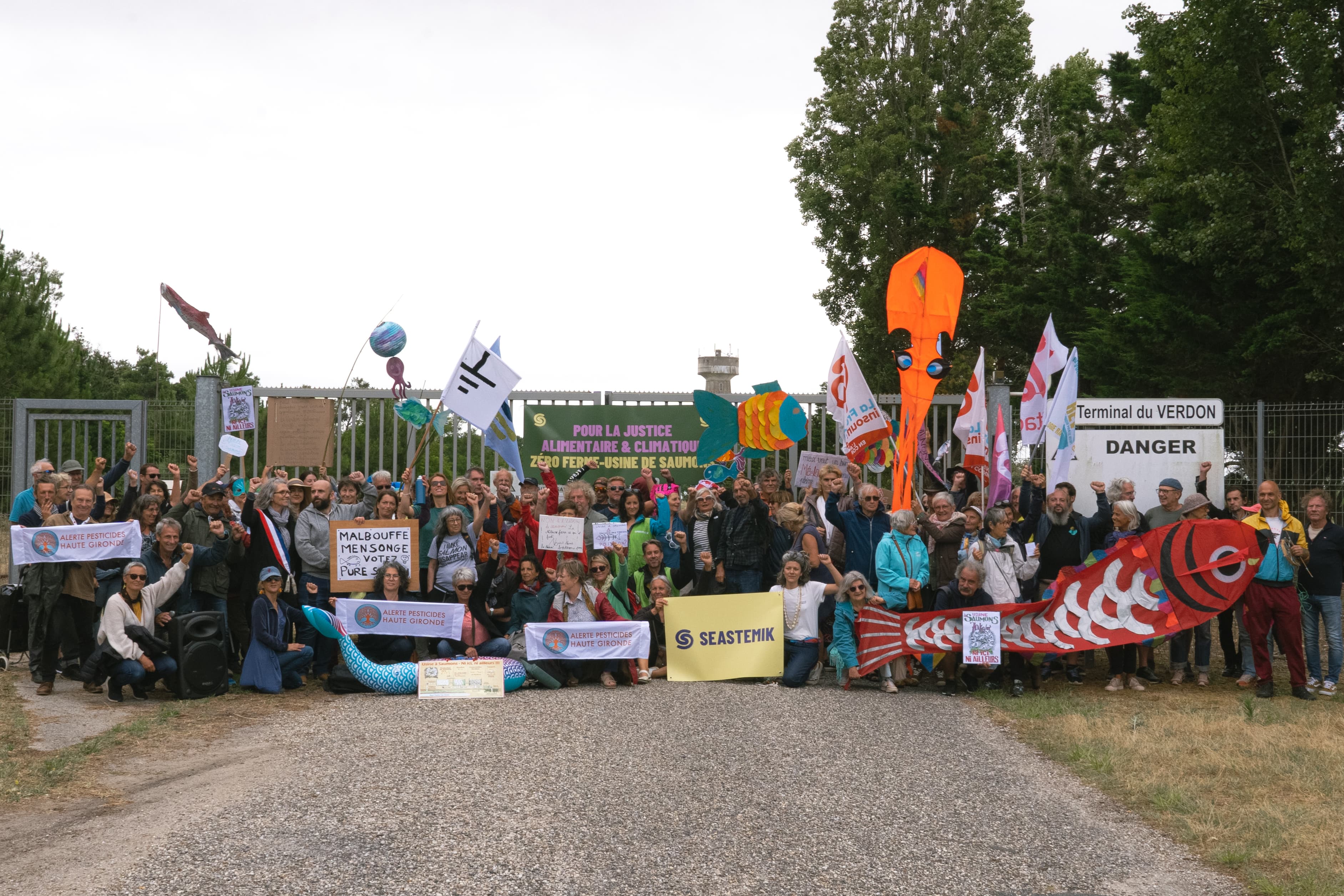
For others, it was a chance to explore new food. Charlotte turned to plant-based recipes inspired by dishes she already liked. For Fleur, the biggest challenge was sushi. But when she stopped ordering “the salmon set,” she discovered dishes and flavors she probably would never have chosen before.
The same was true for Esther, who still loves ocean flavors. She began exploring new ways to find them, including cuisines and ingredients that were less familiar to her.
What about holiday meals?
Let’s be honest: salmon has a habit of reappearing on plates whenever there is a holiday meal with family or friends.
Several team members had to find a way to navigate this. Marie found hers. She did not want to ask her loved ones to cook something different for her, so she started cooking for the holidays. “I always make dishes that get everyone at the table excited.”
Diane prefers to talk things through in advance with family, friends, or partners and find a solution that works for everyone.
Charlotte also reminds us that it is important to set boundaries. We can explain our choices, but we do not have to become the food-transition ambassador at every family meal.
So how do you get started?
There is no single method. Some people may prefer to start with one day, then a week or a month without salmon. Others may need a moment of realization and stop all at once. The most important thing is to find an approach you can sustain. Here are a few tips from Seastemik:
- Get informed. Pink Bombs is here for that. There are also reports such as Le saumon, nouvel avatar de l’élevage industriel (Arte, 2026), documentaries such as Seaspiracy (Netflix, 2021), and books such as Un poison nommé saumon by Maxime Carsel (Broché, 2025).
- Start by understanding what is holding you back. Is it taste, texture, habits, family meals, or nutrition questions? Every obstacle has a solution.
- Find support. Talking with loved ones, cooking together, sharing recipes, or taking on small challenges as a group can make the transition much easier. As Esther puts it: “Learn, talk about your questions with the people around you,” and perhaps “set challenges with friends to spend periods without salmon.”
- Above all, focus on enjoyment. Try new recipes, discover new ingredients, find ocean flavors in other ways, and share your dishes with others. For Charlotte, it means “opening up to new dishes and broadening your culinary repertoire,” rather than seeing the change as a constraint.